


Investing in Faculty, Advancing Data Science Across the University
Several years ago, the Frost Institute for Data Science and Computing (IDSC) launched an ambitious faculty hiring initiative designed to strengthen data science scholarship across the University of Miami. Thanks to partnerships with schools and departments throughout the University, IDSC helped recruit 14 faculty members into jointly funded interdisciplinary positions.
The model offered an unusual and valuable opportunity. Faculty could hold appointments within their academic disciplines while receiving additional research time and support from IDSC. The goal was not just to add data scientists to the University but to embed expertise in data science, artificial intelligence, and machine learning in fields ranging from atmospheric and marine sciences to engineering and communication.
 Now that the first phase of this hiring initiative is complete, we have an opportunity to reflect on its progress. The results are extremely encouraging.
Our jointly appointed faculty members are developing strong research programs and earning recognition at the national level, including:
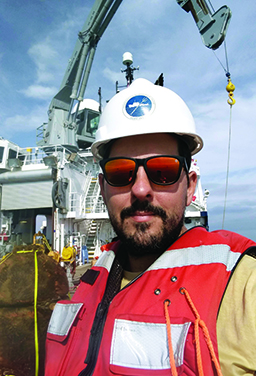
Milan Curcic, IDSC core faculty member and assistant professor of Ocean Sciences of the Rosenstiel School was recently selected for a National Science Foundation Faculty Early Career Development Program (CAREER) award. His project, CAREER: Quantifying Wind-driven Wave Tearing and its Impacts on Hurricane Air-Sea Drag, will advance our understanding of air-sea interactions and their role in hurricane dynamics.
 Mingzhe Chen, a Knight Foundation Chair in Data Science and AI at IDSC and assistant professor in the College of Engineering’s Department of Electrical and Computer Engineering, has received multiple awards. Among them is an NSF CAREER award for his work on AI-native semantic communication networks, an emerging field that aims to make future wireless systems faster, more efficient, and more adaptive by focusing on the intent and context of information rather than transmitting every bit of raw data.
NSF CAREER awards are among the most prestigious honors available to early-career researchers. They recognize faculty members who have the potential to serve as academic role models in both research and education and to lead advances within their disciplines.
These accomplishments are especially meaningful during a challenging period for extramural research funding. They demonstrate not only the excellence of the faculty members selected through this initiative but also the value of providing researchers the time, institutional support and interdisciplinary connections needed to build our programs.
The success of these hires reflects the outstanding work of the search committees and the exceptional talent and creativity of our faculty members.
Leading Innovation in Education
These faculty members are also helping the University develop new approaches to education in data science and artificial intelligence. At the Rosenstiel School, for example, six jointly appointed faculty members have come together to create a course examining applications of artificial intelligence across marine, atmospheric, and earth sciences. Rather than approaching AI from the perspective of a single discipline, the course will introduce students to its uses and implications across the broad range of fields represented in the School.
This collaborative model is particularly timely. Universities are still determining how to best incorporate artificial intelligence into teaching and learning. AI offers extraordinary possibilities, but it also raises important questions involving ethics, academic integrity, environmental impact, data quality, and responsible use.
Our faculty are helping lead the conversations. By bringing disciplinary knowledge together with expertise in data science and machine learning, they are preparing students not only to use the new technologies but to understand their limitations and apply them thoughtfully and responsibly.
Strengthening the IDSC Community
The impact of these faculty members extends beyond their individual research and teaching. Many have taken active leadership roles in IDSC’s grant programs, including evaluating proposals and helping to identify themes that can encourage new interdisciplinary collaboration. They also are contributing to the scientific programming of IDSC Day and other outreach initiatives that bring researchers from across the University together.
This engagement is an essential measure of the initiative’s success. The faculty members recruited through these joint appointments have embraced the full mission of IDSC of enhancing education, fostering collaboration, and strengthening the University’s data science community.
Our Expanding the Use of Collaborative Data Science at UM grants program continues to complement this work by supporting projects that bring data science expertise to significant research questions across the University.
The achievements of our joint faculty hires shows that transformative research rarely occurs within the boundary of a single department or discipline. It requires talented people, meaningful collaboration, and an institutional structure that gives innovative ideas room to grow.
We are proud of what these faculty members have accomplished and excited to see how their work will continue to shape research, education, and interdisciplinary collaboration at the University of Miami.
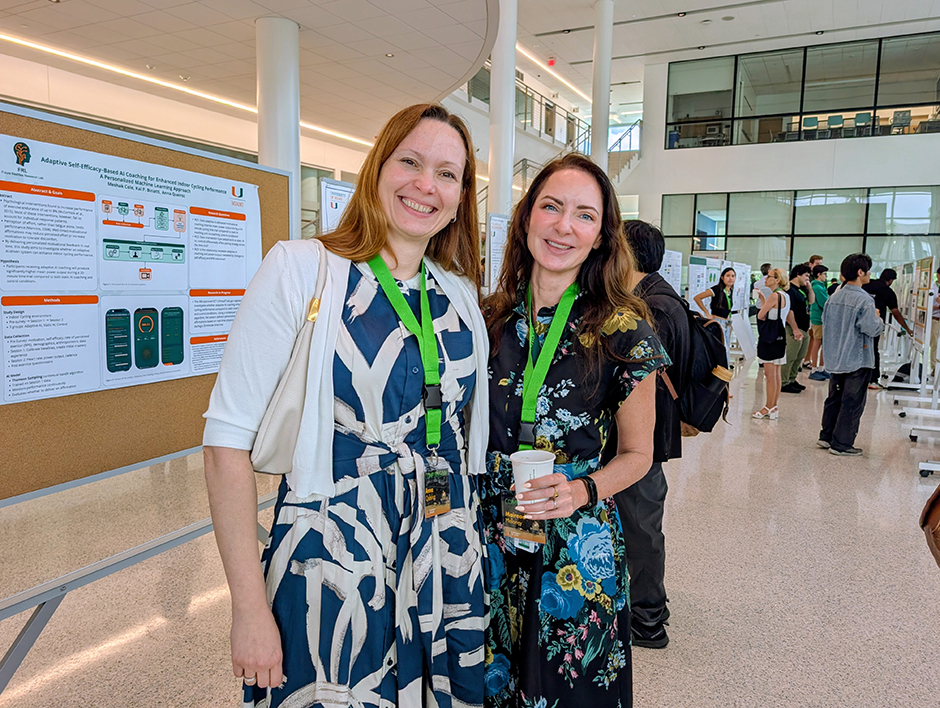
Anna Queiroz and Mairead Moloney at Computing Day 2026

Kaan Inal speaks at IDSC Day 2026
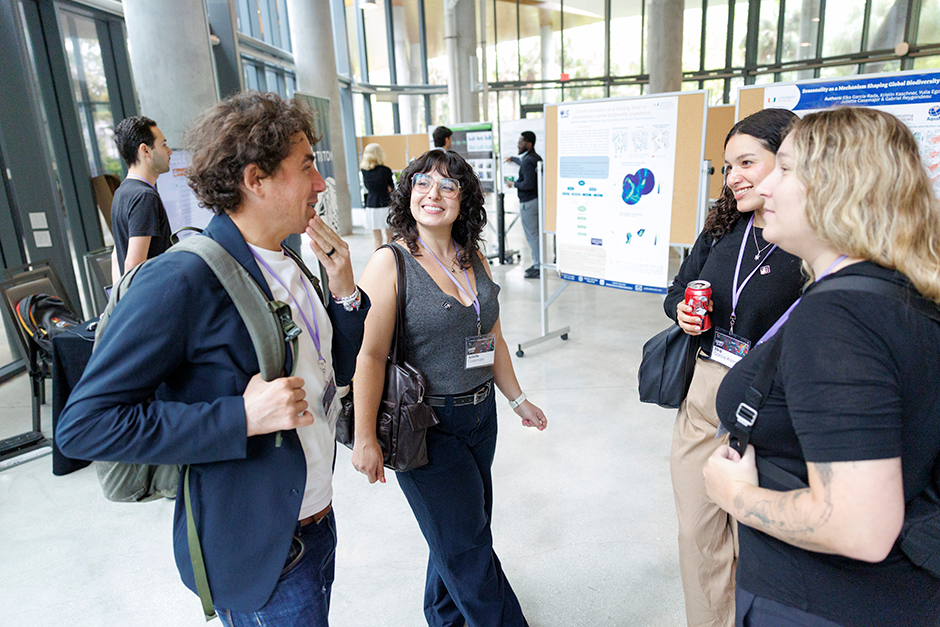
Gabriel Reygondeau chats with students at IDSC Day 2026
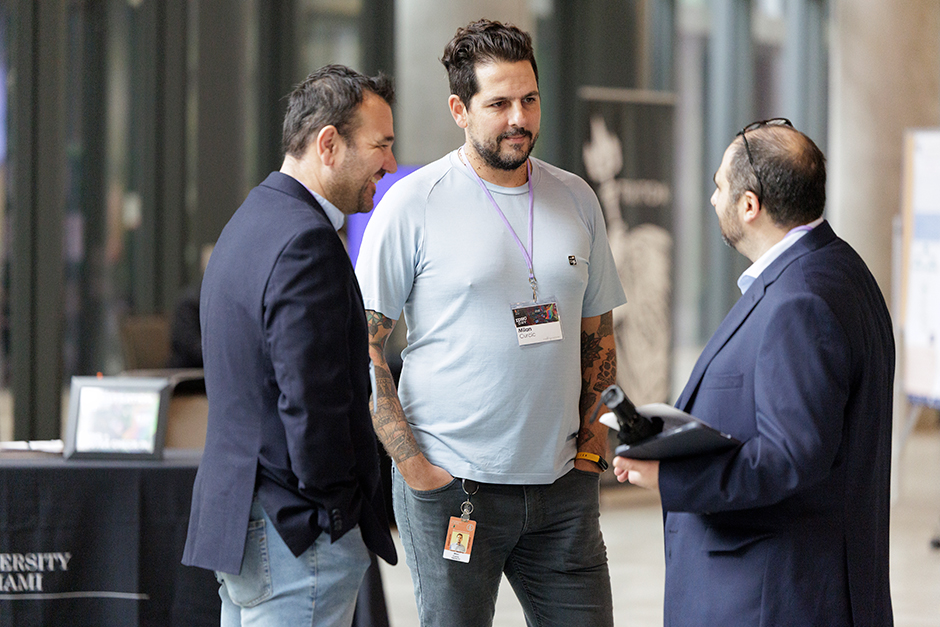
Nico Cappelluti, Milan Curcic, and Kaan Inal at IDSC Day 2026

Mairead Moloney tries out an XR experience at MIAMI XR 2025

David Chapman listens to Distinguished Professor Dilip Sarkar at Computing Day 2026
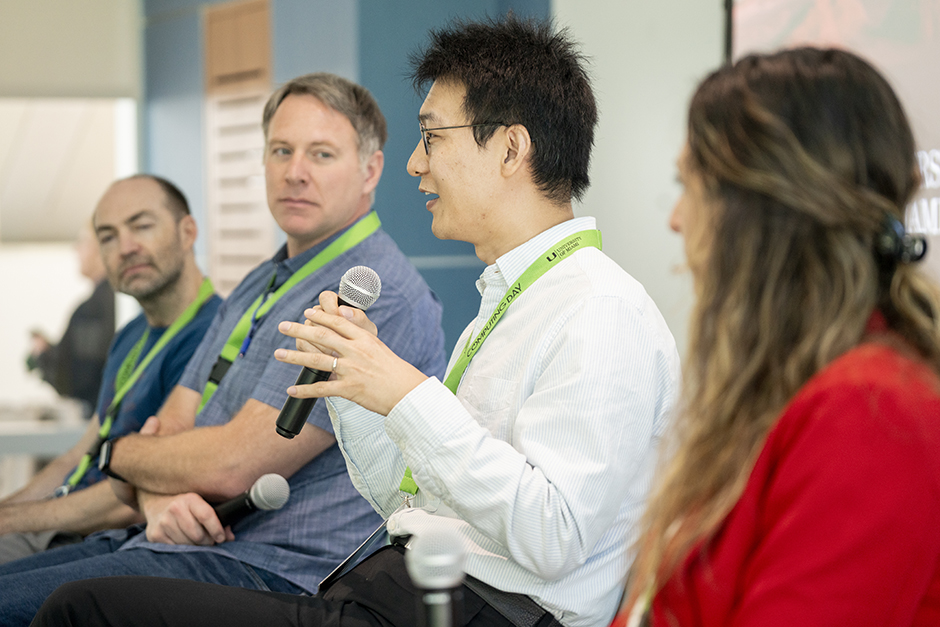
Wanli Xing speaks at Computing Day 2026 AI in Higher Education panel with Clay Ewing, Ben Lauren, and Marybeth Arcodia
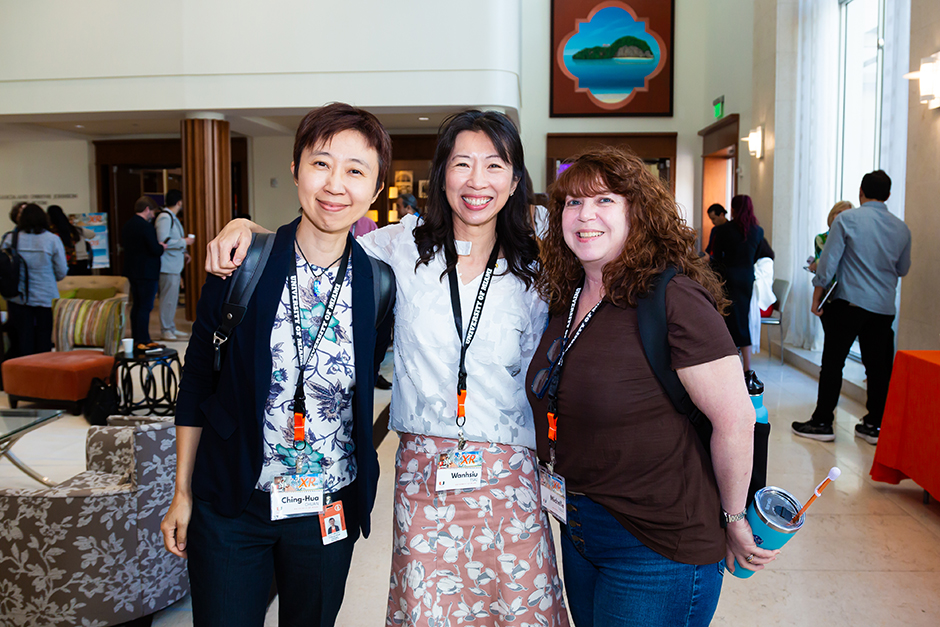
Ching-Hua Chaun with research partners Sunny Tsai and Michelle Seelig at Miami XR 2025

Samuel Goldberg makes a presentation at inaugural IDSC Day
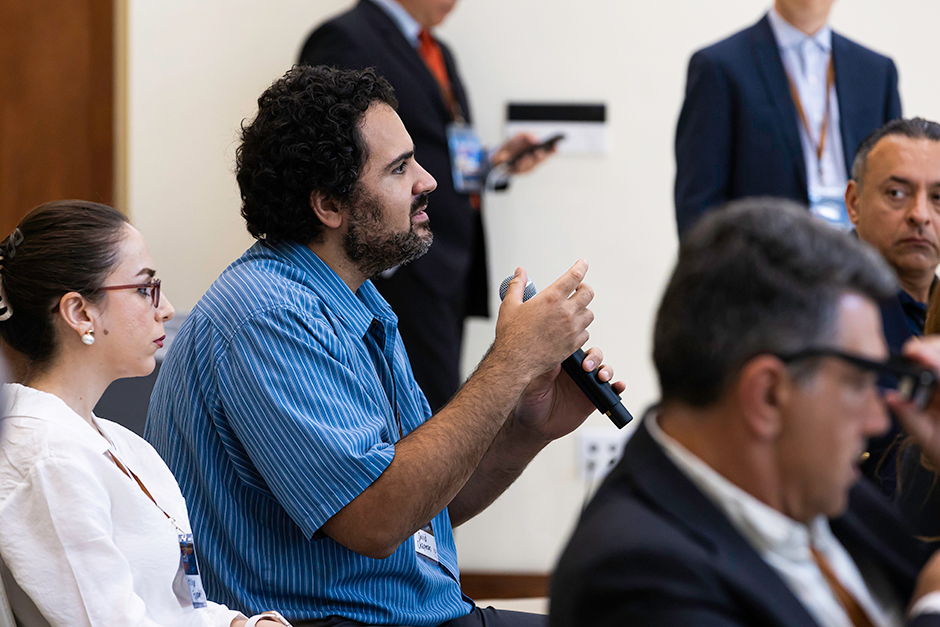
avid Chapman asks a question at Smart Cities MIAMI 2026

Marybeth Arcodia speaks at Computing Day

Juan Carlos Villasenor-Derbez speaks at IDSC Day 2025 with fellow panelists and IDSC Core Faculty Members Gabriel Reygondeau and Michael Scott Fischer

Anna Queiroz introduces Chris Dede at Miami XR 2026

GROUP PHOTO 🙂 IDSC Deputy Director Dean Ben Kirtman with IDSC Core Faculty Members: Gabriel Reygondeau, Milan Curcic, Anna Queiroz, Juan Carlos Villasenor-Derbez, Mairead Moloney, IDSC Director Nick Tsinoremas, Michael Scott Fischer, and Kaan Inal at IDSC Day 2025

Ben Kirtman, PhD
idsc deputy director
director, idsc earth systems science
william r. middelthon iii endowed chair in earth science
dean, rosenstiel school of marine, atmospheric, and earth science
__________