


For a growing number of cancer survivors, ringing the bell at the end of primary treatment marks a transition into a complex phase of care that is often less structured and harder to predict. Even after therapy concludes, patients may experience lingering physical symptoms, emotional distress, or other unexpected medical needs that lead to emergency department or urgent care visits or even hospitalizations, along with a worsening symptom burden.
A new multidisciplinary study from Sylvester Comprehensive Cancer Center, part of the University of Miami Miller School of Medicine, suggests that the key to anticipating those outcomes may lie in closely examining electronic health records and patient-reported data systematically, using novel artificial intelligence (AI) technologies.
Read the full article “Redefining Cancer Survivorship Care: How AI Technology and Big Data are Contributing to Proactive Care Delivery” at Inventum.
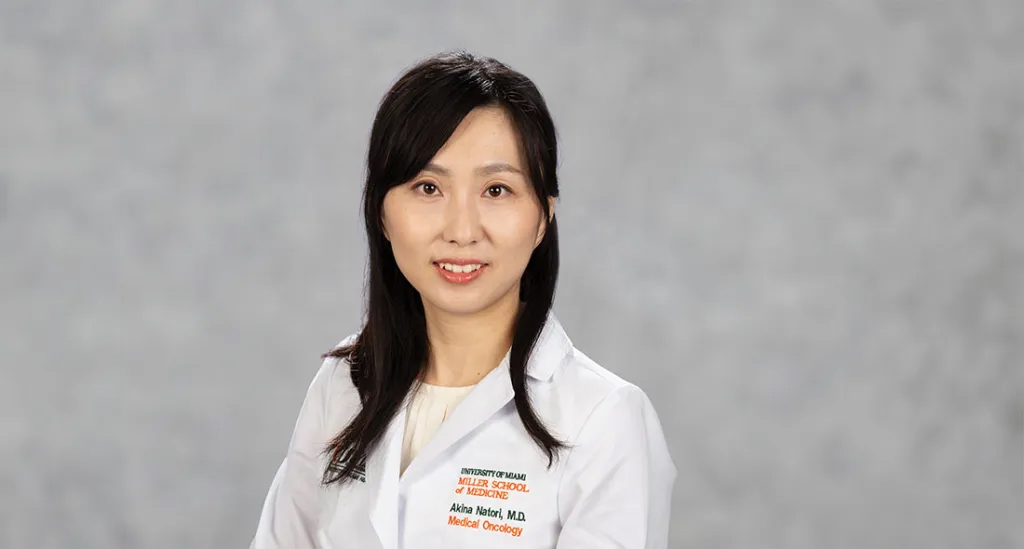
Congratulations to IDSC Authors Ravi Vadapalli, Jerry Bonnell, and Mitsunori Ogihara, and their co-authors led by Akina Natori, M.D., M.S.P.H., a Sylvester oncologist and assistant professor in the Division of Medical Oncology at the Miller School, on the publication of “Machine Learning Risk Stratification Approach Using Patient-Reported Outcomes for Forecasting Unplanned Health Care Use and Symptom Burden in Cancer Survivors” in the JCO Clincial Cancer Informatics Journal.

Abstract
Purpose
Patients and Methods
Results
Conclusion
Read the full paper at ascopubs.org.
__________
Akina Natori, Jerry R. Bonnell, Vasileios Stathias, Sara E. Fleszar-Pavlovic, Mitsunori Ogihara, Andrew Wang, Ravi Vadapalli, Blanca Silvia Noriega Esquives, Tracy E. Crane, Frank J. Penedo. Machine Learning Risk Stratification Approach Using Patient-Reported Outcomes for Forecasting Unplanned Health Care Use and Symptom Burden in Cancer Survivors. JCO Clin Cancer Inform 10, e2500389(2026). DOI: 10.1200/CCI-25-00389