


A shared vision between the Frost Institute for Data Science and Computing (IDSC) and the Miller School of Medicine (MSOM) is giving a new generation of biomedical researchers the computational skills to pursue questions that were once difficult or even impossible to answer.
The collaboration, led by IDSC founding director Nick Tsinoremas, PhD, and Coleen Atkins, PhD, associate dean of graduate education at the Miller School began four years ago with the goal of bringing data science and advanced computational approaches more deeply into graduate biomedical training.
One of the first steps was a two-week summer course in 2022 introducing PhD students to data science. Ravi Vadapalli, PhD, director of advanced computing at IDSC, developed and taught the course. Almost immediately, students wanted more.
 “They started asking if we could make the course a little bit longer,” Dr. Vadapalli said.
That demand helped the IDSC-Miller School collaboration expand the short summer offering into PIB707 Survey of Data Science for Bioinformatics, a three-credit course now offered in both the fall and spring semesters. About 25 to 30 students enroll each semester. Then came another question: how could students use what they were learning in their own research?
As the collaboration continued to evolve, Dr. Vadapalli created PIB708 Advanced Data Science for Bioinformatics, which moves students beyond the basic computational literacy and into more sophisticated applications of machine learning and advanced computing. The progression reflects a larger shift in biomedical science.
Researchers can now generate enormous amounts of information, from lab experiments and patient records to imaging and sequencing data, but analyzing the data can require computational expertise and resources far beyond what is available on a personal computer. Dr. Vadapalli sees students as an important link between those increasingly complex research needs and the advanced computing resources available through IDSC.
Rather than expecting every established researcher to become an expert in rapidly changing computational technologies, the collaboration is developing students who can bring those capabilities directly into the labs where they train. “These courses are meant to train students to become more savvy computing users,” Dr. Vadapalli said. “Students can then return to their mentors, supplement lab experiments with computational approaches, and potentially identify research questions that would not otherwise have been possible.”
Analysis Utilizing Machine Learning
The goal is not to turn biomedical students into computer scientists.
In the introductory course, students move from fundamental computing concepts into data science and machine learning. But, Dr. Vadapalli said, the emphasis has increasingly shifted away from teaching students to write code line by line, particularly as generative AI tools have become increasingly capable of producing code. What matters more, he said, is understanding what the code is doing, whether it is answering the intended question, and how to recognize when something has gone wrong. The curriculum emphasizes problem-based, hands-on learning. Students work with datasets while learning to analyze and visualize information, interpret results, prepare reports, and produce publication-quality materials. PIB708 takes that approach further.
One question students raised was how machine learning could be useful with the relatively small datasets common in experimental biomedical research. The advanced course introduces more sophisticated approaches while also exploring how researchers can combine different kinds of biomedical information. A single project might incorporate tabular patient data like age and clinical characteristics alongside pathology images or CT scans. Other analyses could add genomic sequences, drug information, or experimental measurements. With each new data type, analytical complexity and computational demands increase.
Once researchers start incorporating imaging, sequencing, and other large datasets, some analyses become too large to perform effectively on a personal computer. That is where students begin learning to work with IDSC’s advanced computing infrastructure.
Students Ask For More
Student response suggests the approach is resonating. Course evaluations have highlighted the value of working with Triton, the University of Miami’s supercomputing environment, and of applying concepts as they are introduced. Students repeatedly ask for more time, more difficult problems, and more opportunities to apply what they are learning to real research.
One student requested another lab focused on a multimodal pipeline combining images and genetic data, along with more time using Triton. Another suggested allowing students to bring their own research datasets into lab exercises. A third wanted the course to be longer and the assignments to be more challenging. These requests echo the same student interest that drove the program’s expansion in the first place.
Applying Critical Skills Learned in the Lab
The courses are one part of the broader strategy envisioned by Dr. Tsinoremas and Dr. Atkins to bring advanced computational approaches into biomedical research by building those skills among the students who will carry them into the lab.
 “One of IDSC’s main objectives is to grow capacity and increase the computational and data science thinking across the entire University, as development of such skills become an essential part of all educational programs,” Dr. Tsinoremas said. “We are pleased to partner with Dr. Coleen Atkins and the PIBS program in the Medical School to develop more computational and AI courses for our graduate students in the program.”
The need is growing as biomedical research becomes increasingly data-intensive, and students can help close the gap. A trainee who understands both biomedical science and computational methods can work alongside a faculty mentor, recognize where an advanced analysis might add value, and connect the lab with IDSC expertise and resources.
 The potential impact extends beyond individual labs. Dr. Vadapalli sees computationally fluent students as connectors across disciplines, bringing together investigators, datasets, and methods.
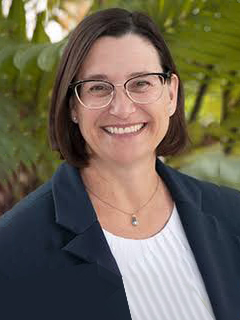
“Our goal at the Miller School is to reach every graduate student, regardless of their starting coding skills, and build their computational biology fluency as a core scientific skill,” Dr. Atkins said. “The scientific technologies of the future will generate datasets that we cannot yet even envision. By teaching our graduate students the critical skills of how to approach analysis of large-scale datasets, we are preparing biomedical researchers who will be able to see these new technologies as opportunities to turn these datasets into solutions to solve the health problems facing our society.”
Computing Skills Boost Research Impact
Ultimately, Dr. Vadapalli describes the initiative as having three interconnected goals.
The first is to develop a larger biomedical workforce that is comfortable using computational methods and knows how to access IDSC’s advanced computing resources and expertise.
The second is to enable those students to work with faculty across medical disciplines, expanding what individual research teams can attempt and potentially contributing to new collaborations and research proposals.
The third is innovation. If new computational approaches allow researchers to ask different questions, combine previously disconnected types of data, or develop new analytical methods, the impact could extend well beyond the classroom.
Since 2022, students have repeatedly pushed for more, helping the initiative grow beyond its original scope while advancing the shared goal of making computational thinking an integral part of biomedical graduate education.
What began as a short introduction to data science has become a growing training pathway in which emerging biomedical researchers learn to use machine learning, advanced computing, and increasingly complex datasets as part of the everyday work of scientific discovery.
__________
Story by Lauren Comander